
I am a self-proclaimed TV snob who gets genuinely excited about cutting-edge display technology. In my early twenties, I worked for Pioneer during the golden age of plasma displays. Back then, a 50” plasma retailed for $13,000—and people bought them. I even bought one myself (with an employee discount, of course). That TV lasted from 2005 until it finally died last year.
Fast-forward to today, and spending that much on a 50” display seems absurd. Plasma is long gone, and OLED reigns supreme. Flagship 77” OLEDs from Sony or LG cost anywhere from $3,500 to $5,000. Having lived with a 77” LG Gallery Series OLED for several months, I can attest to its brilliance—the color and picture quality were so stunning that even watching the news felt like an event.
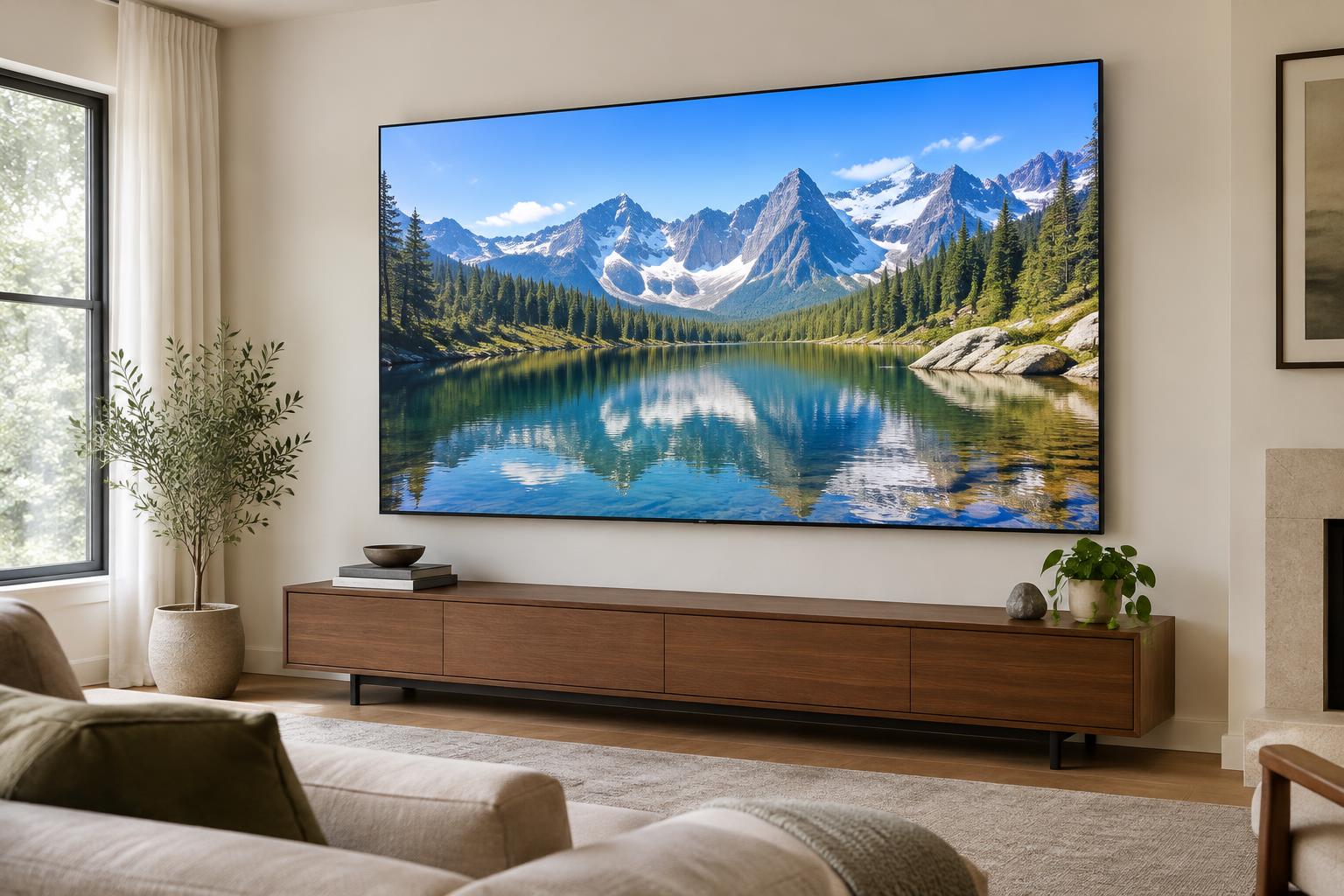
Then I spotted a 98” LG LED on sale for just $1,699. This wasn't a Black Friday doorbuster; that was just its regular price. I knew it wouldn't match the image quality of a flagship OLED, but I wondered if it would be "good enough" for my clients, my family, and me. So, I bought one.
Swapping out the 77” for the 98” was no small task. The new display weighs 175 lbs, requiring a heavy-duty wall mount and plenty of heavy lifting. Once it was powered on, my initial reaction was a mix of annoyance and impressive surprise.
The setup menu was slow and stripped-down—a clear cost-cutting measure—making basic picture adjustments and network setup tedious. However, I bypassed its built-in smart features entirely by connecting an Apple TV. For $250, an external streamer delivers a far smoother interface and means never having to touch the TV's native menu again.
The verdict? I’m genuinely impressed. Watching content on a screen this massive is incredible. There’s a noticeable compromise in picture quality compared to OLED, but the sheer size delivers an overall better viewing experience. For now, it’s a fantastic placeholder until the new higher-end 98” Sony RGB LED drops closer to the $5,000 mark.
Written by
Michael Buckner